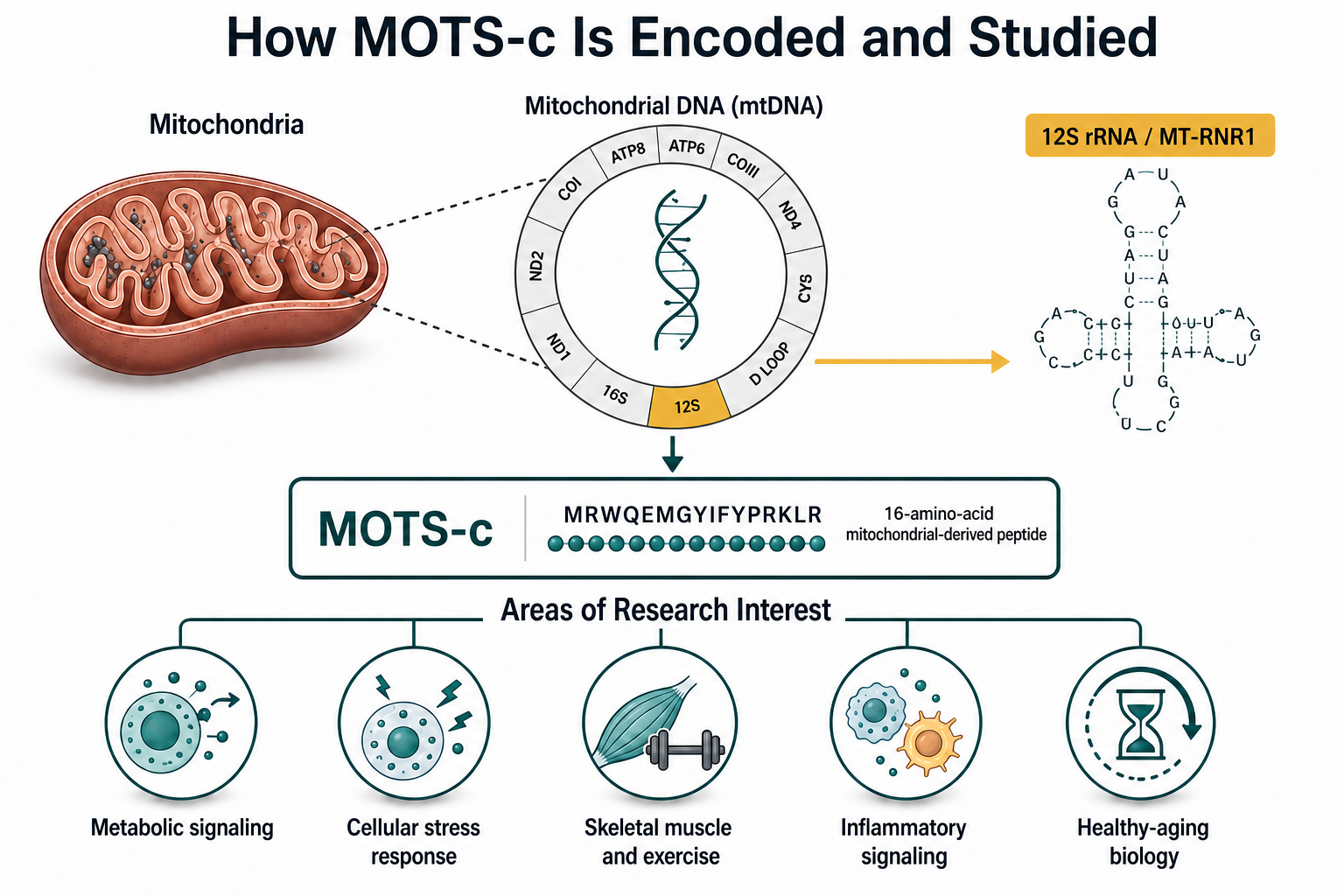
Preclinical research suggests that MOTS-c may influence AMP-activated protein kinase (AMPK), a cellular energy-sensing pathway. It has also been studied in relation to glucose metabolism, insulin sensitivity, oxidative stress, skeletal muscle adaptation, and metabolic flexibility. These mechanisms remain under active investigation.
Areas of Research
Animal and laboratory studies have examined whether MOTS-c may influence glucose utilization and insulin sensitivity. A Phase 2a clinical trial registered in 2026 is evaluating investigational MOTS-c in adults with prediabetes and overweight or obesity. Results have not yet been posted.
View Clinical TrialMOTS-c has been associated with exercise-related signaling and skeletal muscle metabolism. Human observational studies have measured changes in circulating mitochondrial-derived peptides after exercise, but this does not establish that administering MOTS-c reproduces the benefits of physical activity.
Because mitochondrial function changes with age and chronic disease, researchers are studying MOTS-c as a potential marker and signaling molecule involved in age-related metabolic adaptation. Claims that MOTS-c reverses aging are not supported by established clinical evidence.


The human safety profile of MOTS-c remains incomplete, particularly with repeated or long-term use. FDA has raised concerns about possible immune reactions, peptide aggregation and impurities, product consistency, and limited human exposure and safety data for compounded MOTS-c products.
Potential risks may include pain, redness, swelling, or bruising at the injection site; allergic or immune reactions; infection; contamination; dosing variability; and unintended changes in blood glucose or other metabolic markers. Medication interactions and risks during pregnancy, breastfeeding, cancer, autoimmune disease, or significant kidney or liver disease have not been adequately established.

If you have concerns about metabolic health, weight, blood glucose, fatigue, or bone health, schedule a comprehensive medical evaluation. Evidence-based testing can help identify underlying factors and guide a personalized treatment plan using appropriate, clinically established options.

The following clinical, regulatory, and peer-reviewed sources provide additional information about ongoing MOTS-c research, mitochondrial signaling, metabolic health, and exercise physiology.